The School for Scandal is one of the few late 18th-century English comedies that continue to be performed today. The charming recent production by the Clayton Community Theatre demonstrated the enduring appeal of Richard Brinsley Sheridan’s play.
It portrays an upper crust society in which malicious gossip can easily destroy the reputation essential for social success. The play’s primary rumormonger is Lady Sneerwell. She is in love with Charles Surface, who is pursuing Maria, a wealthy heiress whose guardian is Sir Peter Teazle. Lady Sneerwell conspires with her servant Snake and Charles’ brother Joseph to ruin Charles’ hope of winning Maria by spreading rumors of an affair between Charles and Sir Peter’s young wife.
The brothers are not as they seem. Charles has a poor reputation because of his extravagant lifestyle, but he has a good heart. Joseph has cultivated a good reputation, but it is a façade. Beneath it, he is a self-serving hypocrite. The brothers’ hopes for the future depend on their rich uncle, Sir Oliver Surface, who tests them in disguise to determine which one should be his heir.
In earlier reviews of The School for Scandal, I noted that the characters were portrayed in a very broad manner. In the Clayton production, director Heather Sartin wisely trusted the text and avoided exaggeration that might subvert the threat posed by the vicious characters. The Clayton cast delivered consistently believable performances that brought out the comedy without undermining the drama. Assigning important male roles to women made no difference to the show’s persuasiveness.
The accomplished cast included Sean Monarch as Sir Peter Teazle, Jan Meyer as Sir Oliver Surface, Erin Struckhoff as Charles Surface, Leslie Wobbe as Joseph Surface, Michael Monsey as Mr. Crabtree and Moses, Scott Jackson as Sir Benjamin Backbite and Trip, Brandon Atkins as Rowley, Mike Maskus as Careless, Nancy Lubowitz as Lady Sneerwell, Carolyn Bergdolt as Lady Teazle, Marni Romano as Maria, Lisa Haley as Mrs. Candour, Lejla Suskic as a servant, and Mary Klein as Snake.
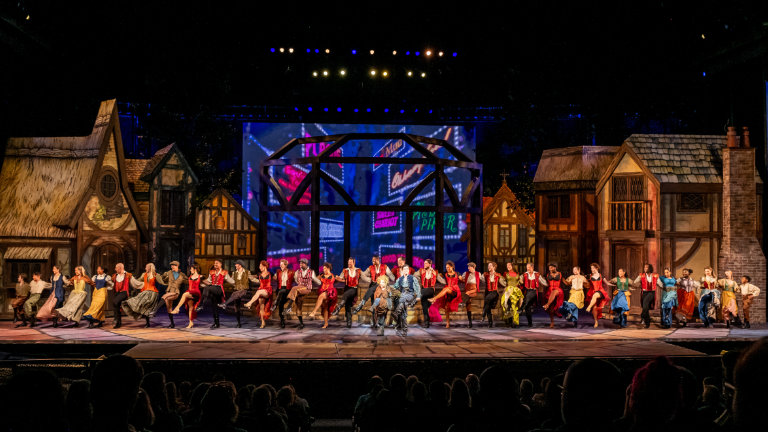
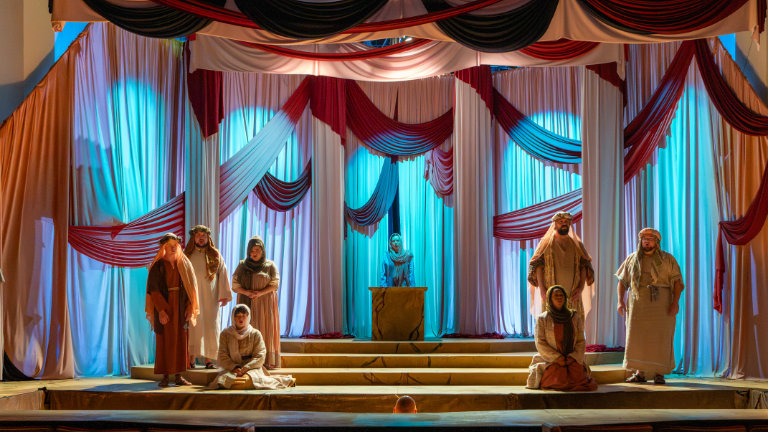
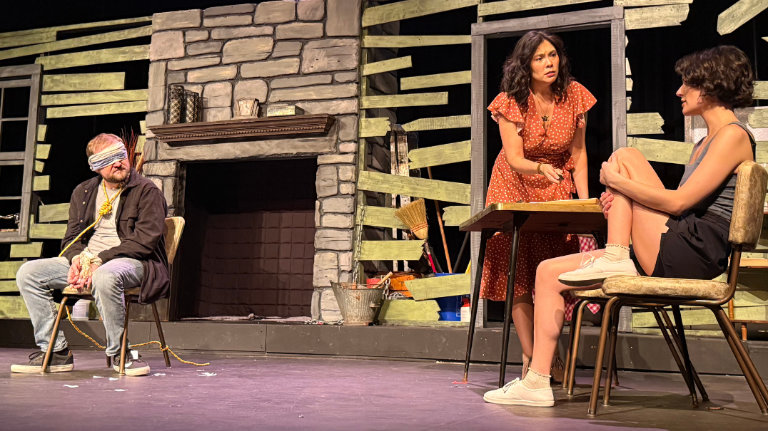
Heather Sartin’s clever scenic design consisted of set pieces that could be moved quickly to minimize delays for scene changes. The set helped locate the play in its Georgian period along with the costumes, wigs, and makeup by Abby Pastorello. The helpful technical contributions included props by Laurie Shelton, lighting by Nathan Schreder, and sound by Will Sartin, who composed a lively piece of incidental music entitled “School for Scandal 101.”
—Gerry Kowarsky