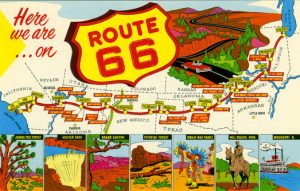
In the third episode of Who Else Loves History?, host Tim Gore and fellow history enthusiasts hit the road to explore the story of Route 66, the highway that became a symbol of the American road trip.
Established in 1926, Route 66 connected communities across the country and helped create a culture built around family vacations, roadside attractions, neon signs, diners, and motor courts. Dubbed the “Mother Road” by John Steinbeck in his epic novel, “The Grapes of Wrath,” for how it nurtured dust bowl migrants on their journey west, after World War II it became iconic in a different way as it nurtured America’s love affair with the car.
In this episode we uncover the origins of the famous highway and explore landmarks and characters that helped make the Mother Road famous, including the Old Chain of Rocks Bridge, Coral Court Motel, Bob’s Gasoline Alley, Mother Jones, and the World’s Largest Rocking Chair. But Route 66’s story isn’t just about its rise. The arrival of the interstate highway system eventually pulled travelers away from the old road, leaving many businesses and communities behind, and we share that story too.
Join us for a journey down the Mother Road and discover why Route 66 remains one of America’s most beloved highways.
Time Breakdown of the Video:
- 0:00 to 02:05–Introduction & Overview
- 02:06 to 05:36–Origins of U.S. Federal Highways
- 05:37 to 08:40–Cyrus Avery & the Birth of Route 66
- 08:41 to 12:29–Roadside Shrines & Rebels
- 12:30 to 13:42–Ted Drewes & a TV Show
- 13:43 to 33:59–Inside the “No-Tell” Coral Court Motel
- 33:40 to 37:15–The Interstate Villain
- 37:16 to 46:23–Roadside Rocking Chair & Gasoline Alley
- 46:24 to 47:12–Credits
Quick Ideas for Using the Video with Students:
1. Use different sections of the video as your students study the changing nature of American lifestyle in the 20th century. How did the automobile and highways impact that lifestyle?
2. Use the video as part of a geography unit that has students studying American geography along the route of the famous highways. What states do they pass through? How does the physical geography of the country change along the route? How do population centers change along the route? How is economic geography manifested along the route?
3. Do your and your students live on or near the route? Does it pass through your state? Use sections of the video to inspire students to create their own “story of the mother road” as it relates to your “neck of the woods.”
4. Provide the video to students interested in doing an independent or group project on the highway, on the impact of the automobile, or other topics related to content in the video.